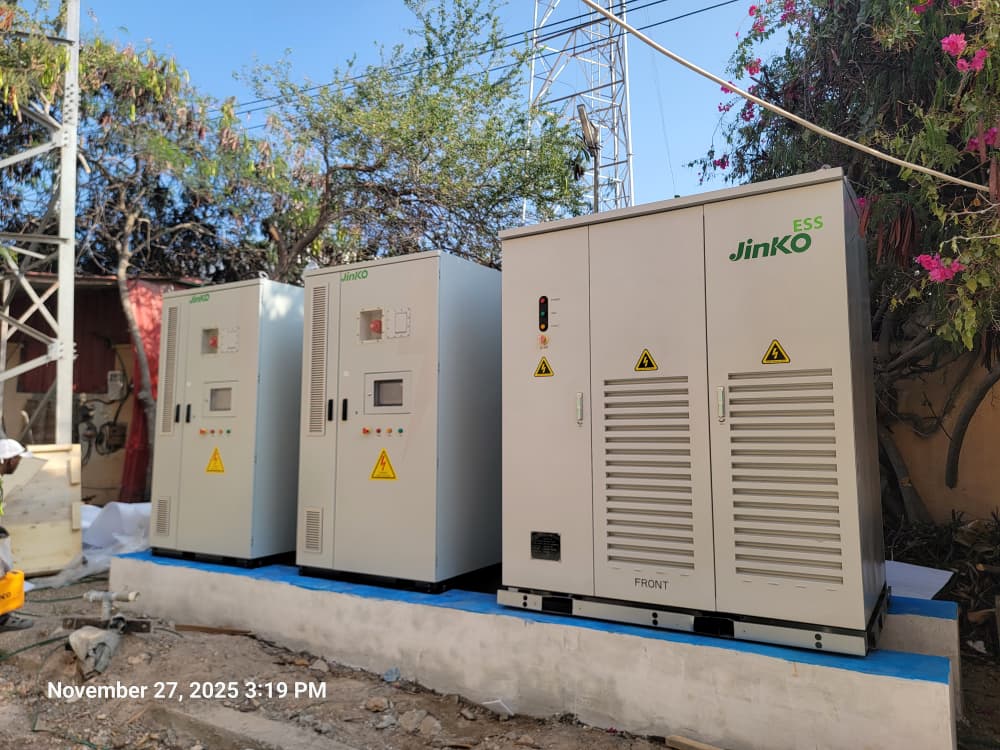
The Banaadir Education Solarization Project, executed by Blueflag Energy under the World Bank's Somali Electricity Sector Recovery Project (SESRP), is a critical intervention designed to address the severe unreliability and high cost of electricity in the Banadir region's schools, which currently depend on expensive diesel generation. This initiative represents a definitive shift toward a sustainable, clean energy solution. The technical scope involves the comprehensive electrification of approximately 46 educational facilities, utilizing custom-designed, hybrid/off-grid systems featuring Solar Photovoltaic (PV) panels and Battery Energy Storage Systems (BESS). With capacities ranging up to 250 kWp of PV and 800 kWh of BESS, these installations are sized to provide reliable, 24/7 standalone electricity for everything from basic lighting to essential digital learning tools and administrative functions.
This strategic investment delivers substantial social, environmental, and economic benefits. The provision of guaranteed, reliable power immediately enhances the learning environment, improves student retention, and frees up operational budgets by eliminating costly fuel consumption, allowing savings to be reinvested in education. To ensure long-term success, the project is integrated with the SESRP's sustainability measures (Component 4), which mandate a two-year Operations and Maintenance (O&M) period by the contractor and require extensive technical training for local Ministry of Education staff, thereby building essential capacity for decentralized, clean energy management in Somalia.
Overview & Challenge
The Banaadir Education Solarization Project is a critical intervention under the World Bank's Somali Electricity Sector Recovery Project (SESRP) designed to tackle the severe crisis of unreliable and expensive power supply in the Banadir region's schools. Currently, these educational facilities rely heavily on costly, polluting diesel generators, which impede learning continuity and drain vital operational funds. The core challenge this initiative addresses is the need to transition these 46 facilities from unstable fossil fuel dependence to a sustainable, 24/7 standalone clean energy solution using solar PV and battery storage.